
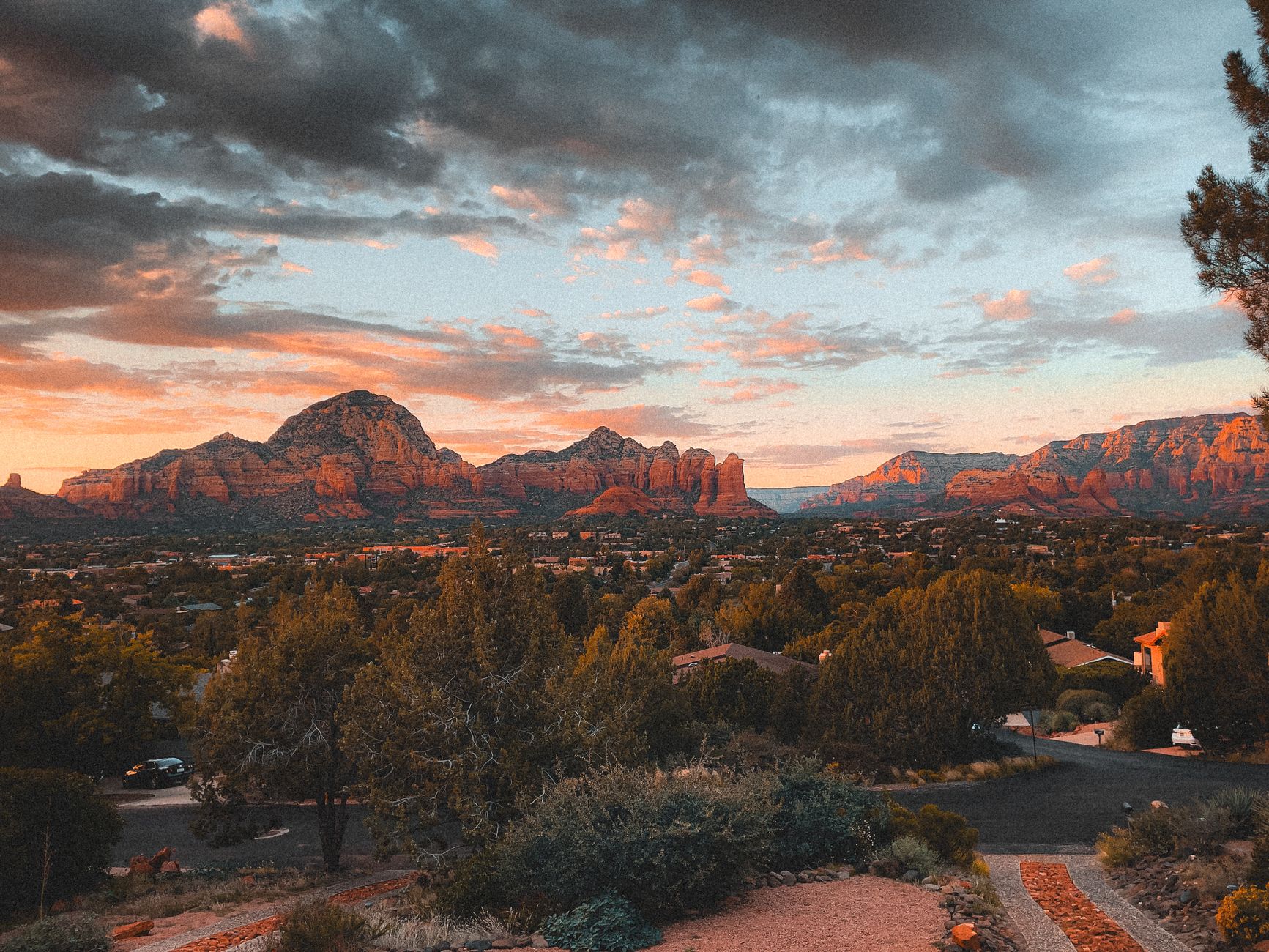
If you’re thinking about moving to Sedona, you’re probably picturing red rock towers glowing at sunset and imagining what it would feel like to wake up to that view every day. That part of the fantasy is real. What’s harder to picture from the outside is what daily life actually looks like here: which neighborhood fits your pace, how the seasons play out, what services are nearby versus a drive away, and how the whole town shifts personality depending on where you land. This guide walks through what to actually think through before you make the leap.
Why People Move to Sedona
Most people who end up moving to Sedona didn’t come for one reason. They came for the red rocks, the hiking straight out the back door, the quiet, the slower pace, or a combination of all of it. Sedona sits in the Verde Valley at roughly 4,350 feet, which means you get four real seasons without the extremes: warm summers, a light dusting of snow some winters, and a July and August monsoon season that turns the afternoon sky dramatic and cools everything off. It’s not a beach town and it’s not a ski town. It’s a red rock town, and that identity shapes everything from the pace of life to the kind of neighbor you’ll have.
Understanding Sedona’s Different Areas
One of the most common mistakes people make when they start looking at Sedona is treating it as one place. It isn’t. The three main areas feel genuinely different, and picking the right one matters more than almost anything else in the decision.
West Sedona
West Sedona is where locals actually live. It’s the everyday side of town: grocery stores, medical offices, gyms, coffee shops people go to more than once, and a steady stream of residential neighborhoods tucked against the red rocks without being in the middle of the tourist flow. If you want a Sedona address but also want to run errands without fighting traffic, this is usually the answer.
Uptown Sedona
Uptown is the postcard version. Galleries, shops, restaurants, and the highest concentration of visitors. It’s beautiful and walkable, and living near it means you’re close to the energy of the town, but it also means dealing with tourist traffic and seasonal crowds as part of your daily backdrop. Some people love that proximity. Others find it wears thin fast.
Village of Oak Creek
South of the main part of town, the Village of Oak Creek, often just called VOC, tends to feel quieter and more residential, with golf and easy access to trailheads like Bell Rock and Cathedral Rock. A lot of people who want the Sedona lifestyle without being in the thick of Uptown’s tourist traffic end up here.
What About the Verde Valley Towns Nearby?
Part of moving to Sedona well is understanding that Sedona doesn’t exist in isolation. The greater Verde Valley gives you options if Sedona itself doesn’t quite fit your budget, your pace, or your vision.
- Cottonwood, about 20 minutes away, has a walkable Old Town, wine tasting rooms, and a community that’s grown steadily while keeping a small-town feel.
- Clarkdale is quiet and close-knit, with an easy connection to the Verde Canyon Railroad.
- Jerome is a historic mining town perched on Mingus Mountain, full of character and a completely different pace than the valley floor.
- Camp Verde and Cornville offer more rural, spread-out living while still keeping you close to everything.
- Page Springs anchors part of the Verde Valley Wine Trail, which also runs through Cornville and Cottonwood’s Old Town, and it’s a good sense of how much this region has grown beyond just Sedona itself.
If Sedona’s energy and scenery are the draw but the town itself feels too small, tourist-heavy, or expensive for what you want, the surrounding Verde Valley is worth exploring before you rule the area out entirely.
What the Lifestyle Actually Feels Like
Trail access is not an exaggeration here. Depending on where you live, you could be at a trailhead in minutes rather than driving across town. Cathedral Rock, Bell Rock, Devil’s Bridge, and Airport Mesa aren’t just scenic postcards, they’re the kind of places locals visit on a random Tuesday evening. Oak Creek Canyon and Slide Rock State Park give you a completely different landscape just north of town, shaded and green against the red rock backdrop everywhere else.
Sedona is also known for its energy vortex sites, with Airport Mesa, Cathedral Rock, Bell Rock, and Boynton Canyon being the four most recognized. Whether or not that’s part of your draw, it’s part of the town’s identity and it brings a steady stream of visitors seeking that experience, which shapes the local culture in ways worth understanding before you move.
Tlaquepaque Arts and Shopping Village and the Chapel of the Holy Cross round out the landmarks that make Sedona feel distinct from any other red rock town in the Southwest. Living here means these aren’t destinations you visit once, they become part of your regular rotation.
Is Sedona a Good Fit for Retirement?
Sedona draws a steady number of retirees, and it’s easy to see why. The scenery, the mild four-season climate, the slower pace in West Sedona and the Village of Oak Creek, and the access to nature all make for an appealing chapter. That said, retirement here works best for people who value an active, outdoor-oriented lifestyle. If daily hiking, gallery hopping, or simply being surrounded by red rock views is part of your vision for this stage of life, Sedona tends to deliver. If you’re looking for a dense retirement community with a specific set of built-in social infrastructure, it’s worth comparing Sedona against nearby Verde Valley towns to see which layout suits you better.
What to Think About Before You Buy or Relocate
Before moving to Sedona becomes more than an idea, there are a few practical questions worth sitting with.
How far are you willing to drive for daily needs?
West Sedona covers most day-to-day errands, but specialized services, larger shopping, or specific medical care may mean a drive to Cottonwood or beyond. Understanding your tolerance for that ahead of time saves frustration later.
Do you want to be near the tourist flow or away from it?
Uptown puts you close to the action. West Sedona and the Village of Oak Creek put distance between you and the seasonal crowds. Neither is right or wrong, it depends on what kind of daily rhythm you want.
What does the terrain mean for your daily life?
Sedona’s red rock landscape isn’t flat. Driveways, lot layouts, and views all get shaped by the terrain, and it’s worth walking a property at different times of day before deciding it’s the one.
Is this a full-time move, a second home, or an investment?
Each of these changes what you should prioritize. A full-time move might lean toward West Sedona’s practicality. A second home might prioritize views and quiet. An investment property might do better near the areas visitors gravitate toward. Getting clear on your intent early makes every other decision easier.
Getting a Feel for the Town Before You Commit
The best way to understand whether moving to Sedona is right for you is to spend real time here across different areas and, if possible, different seasons. Stay in West Sedona for a few days, then Uptown, then the Village of Oak Creek. Drive out to Cottonwood and Jerome. Sit at a trailhead parking lot in the morning and again at sunset. Sedona reveals itself differently depending on where you’re standing, and the town that looks perfect in photos might feel completely different once you’ve spent a week actually living in it.
Moving to Sedona is as much about choosing the right pocket of the Verde Valley as it is about choosing Sedona itself. Take the time to understand the differences between West Sedona, Uptown, and the Village of Oak Creek, get familiar with the surrounding towns, and be honest with yourself about the kind of daily life you actually want. Get that part right, and the rest tends to fall into place.
Frequently Asked Questions
What is the best area to live in Sedona?
It depends on your priorities. West Sedona suits people who want everyday convenience and a residential feel, Uptown suits those who want to be close to galleries and restaurants, and the Village of Oak Creek suits those who want a quieter, more spread-out setting with golf and trail access nearby.
Is Sedona a good place to retire?
Sedona appeals to retirees who want an active, outdoor-oriented lifestyle with mild four-season weather and easy trail access. Those wanting a large built-in retirement community may want to compare Sedona with nearby Verde Valley towns as well.
What is the weather like in Sedona, Arizona?
Sedona sits at about 4,350 feet and has four mild seasons, with warm summers, occasional light winter snow, and a monsoon season in July and August that brings afternoon storms and cooler temperatures.
What towns are near Sedona if I want more options?
The Verde Valley includes Cottonwood, Clarkdale, Jerome, Camp Verde, Cornville, and Page Springs, each with its own character and a shorter or more relaxed pace than Sedona itself, all within a short drive.
Thinking About More Than a Visit?
Sedona has a way of making people wonder what it would be like to stay. If owning a home here has crossed your mind, whether that is a full-time move, a second home, or a place to retire, a home consult is where you get real answers about neighborhoods, what things cost, and what actually fits.
