
If you’re planning your first trip and searching for a real Sedona travel guide instead of a glossy brochure, here’s what actually matters: where to stay, which trails are worth your time, and how to see the red rocks without wasting a day stuck in traffic on 89A. Sedona sits at about 4,350 feet in Arizona’s Verde Valley, which means you get four real seasons, warm summers, occasional light snow in winter, and a July-August monsoon that turns the afternoons dramatic. Here’s how to make the most of it.
Where Is Sedona and How Do You Get There
Sedona is roughly two hours north of Phoenix and about 45 minutes south of Flagstaff, tucked into red rock canyons where the high desert meets the Mogollon Rim. Most first-time visitors fly into Phoenix Sky Harbor and drive up, and the last stretch through the Verde Valley is part of the experience. You’ll pass Camp Verde and Cottonwood before the red rocks start rising around you.
If you’re coming from Flagstaff, the drive down through Oak Creek Canyon on Highway 89A is one of the prettiest approaches to any town in the state, especially in fall when the canyon walls are lined with cottonwoods and bigtooth maples turning gold and red against the sandstone.
Understanding Sedona’s Different Areas
Sedona isn’t one neighborhood, it’s a handful of distinct areas that each feel different, and knowing the difference will shape your whole trip.
Uptown Sedona
This is the postcard version, galleries, shops, restaurants, and the highest concentration of tourist-facing everything. It’s walkable, lively, and a good home base if you want to be in the middle of it, but it’s also the busiest and most trafficked part of town.
West Sedona
This is where locals actually live and shop. It’s stretched along 89A with grocery stores, everyday restaurants, and less foot traffic. If you want a quieter stay with easy access to trailheads on the west side of town, look here.
Village of Oak Creek (VOC)
South of the main town, the Village of Oak Creek is quieter, often more attainable for lodging, and has its own golf courses and trail access. It’s a smart choice if you’d rather avoid the Uptown crowds but still want to be close to everything.
What to See First: Sedona’s Signature Spots
If this is your first Sedona travel guide stop, start with the formations that give the town its identity.
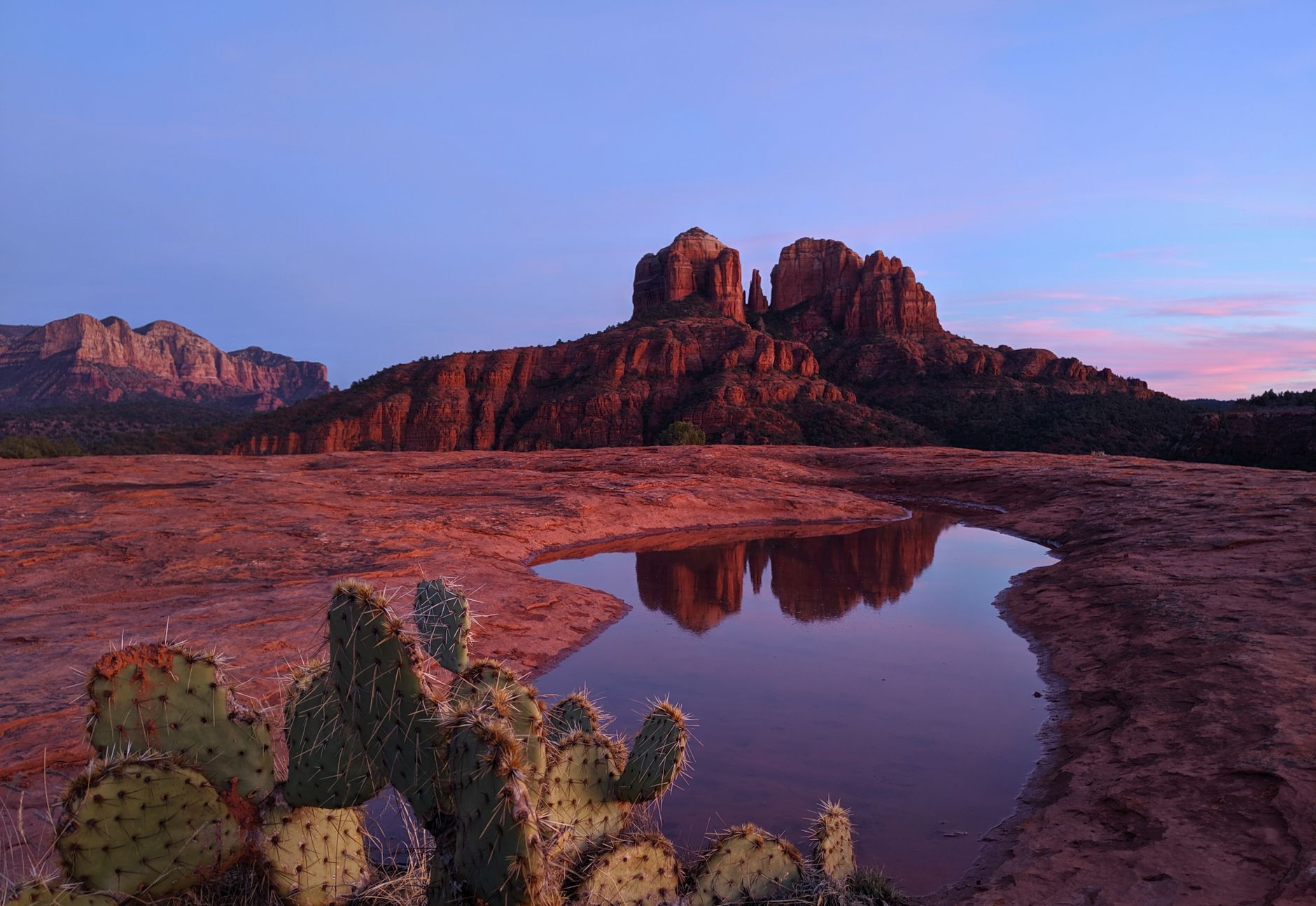
- Cathedral Rock, the most photographed formation in Sedona, especially from the Red Rock Crossing area at sunset
- Bell Rock, an easy formation to spot from the highway and an accessible hike with big payoff views
- Airport Mesa, a short walk to one of the best sunset viewpoints in town
- Chapel of the Holy Cross, built directly into the red rocks south of Uptown
- Tlaquepaque Arts and Shopping Village, a shaded, Spanish colonial-style arts complex that’s worth a slow wander even if you’re not shopping
Best Hikes for First-Timers
You don’t need to be an experienced hiker to get the classic Sedona views, but a few trails deliver more than others.
Easier Trails
- Bell Rock Pathway, mostly flat with the option to scramble higher
- Airport Mesa Loop, short and rewarding, especially near sunset
More Challenging
- Devil’s Bridge, Sedona’s most photographed natural sandstone arch, and popular enough that early morning starts matter
- Cathedral Rock Trail, steep and requires some scrambling, but the summit views over the Verde Valley are worth the effort
If you’re visiting in summer, hike early. The heat builds fast once the sun is fully up, and there’s little shade on most of these trails.
What About the Vortex Sites?
Sedona is known for its energy vortexes, whether or not you buy into the metaphysical side of it, and the four best-known sites are Airport Mesa, Cathedral Rock, Bell Rock, and Boynton Canyon. Even as a purely scenic stop, all four are worth visiting for the views alone. Boynton Canyon in particular is a quieter, more secluded hike than the others, tucked into a canyon lined with red cliffs.
Don’t Skip Oak Creek Canyon and Slide Rock
North of town on 89A, Oak Creek Canyon is a scenic drive in its own right, with switchbacks, overlooks, and shaded picnic spots along the creek. Slide Rock State Park sits along this stretch and is a natural rock water slide carved by Oak Creek, a favorite for families and anyone looking to cool off in summer.
Day Trips Worth Taking From Sedona
Sedona is a great home base for exploring the wider Verde Valley, and most of these towns are a short drive away.
- Cottonwood, about 20 minutes away, with a walkable Old Town full of wine tasting rooms and local restaurants
- Jerome, a historic mining town perched on Mingus Mountain with steep streets, old buildings, and sweeping views down into the Verde Valley
- Clarkdale, a small, quiet town near Cottonwood
- Page Springs and Cornville, home to several wineries along the Verde Valley Wine Trail
If you have an extra day, stringing together Cottonwood’s Old Town, a stop in Jerome, and a winery visit in Page Springs makes for one of the best half-day loops in the region.
When Is the Best Time to Visit Sedona
Sedona’s four mild seasons each bring something different. Spring and fall offer the most comfortable hiking temperatures and are the busiest tourist seasons as a result. Summer brings heat in the afternoons and dramatic monsoon storms in July and August, so mornings are the move for outdoor activity. Winter is mild by most standards, with occasional light snow that dusts the red rocks and clears within a day or two, a striking and less crowded time to visit if you don’t mind cooler temperatures.
Practical Tips for Your First Visit
- Book trailhead parking or a Red Rock Pass ahead of time for popular trails, since lots fill up fast, especially at Devil’s Bridge and Cathedral Rock
- Stay in West Sedona or the Village of Oak Creek if you want a quieter base with easier parking
- Start hikes early, particularly in summer, both for the heat and to beat the crowds at popular spots
- Give yourself at least one extra day to explore Cottonwood, Jerome, or the wine trail rather than trying to cram everything into Sedona proper
However you plan it, the best Sedona travel guide advice is simple: don’t over-schedule. Pick two or three signature spots, build in time for a scenic drive through Oak Creek Canyon, and leave room to wander into the Verde Valley towns nearby. That’s where Sedona’s character really opens up, beyond the postcard shots and into the small-town, red-rock rhythm that keeps people coming back.
Frequently Asked Questions
How many days do you need in Sedona?
Two to three days is enough to hit the signature spots like Cathedral Rock, Bell Rock, and Devil’s Bridge, plus one day trip to a nearby Verde Valley town. A week gives you time to explore further afield into Jerome, Cottonwood, and the wine trail without rushing.
What is the best area to stay in Sedona?
Uptown Sedona puts you closest to galleries, shops, and restaurants but is the busiest area. West Sedona and the Village of Oak Creek are quieter, more residential options with easy trailhead access and often more attainable lodging.
Do you need a permit to hike in Sedona?
Many trailheads require a Red Rock Pass or day-use fee, which can typically be purchased at visitor centers or self-pay stations at trailheads. Popular trails like Devil’s Bridge and Cathedral Rock have limited parking, so arriving early is essential.
What is the best time of year to visit Sedona?
Spring and fall offer the most comfortable temperatures for hiking and are the most popular seasons. Summer is hot in the afternoons with monsoon storms in July and August, while winter is mild with occasional light snow on the red rocks.
Get the Local’s Guide to Sedona
Every week we send the best of Sedona and the Verde Valley: the trails worth the drive, where the locals eat, and what is happening around town. Join free.
