
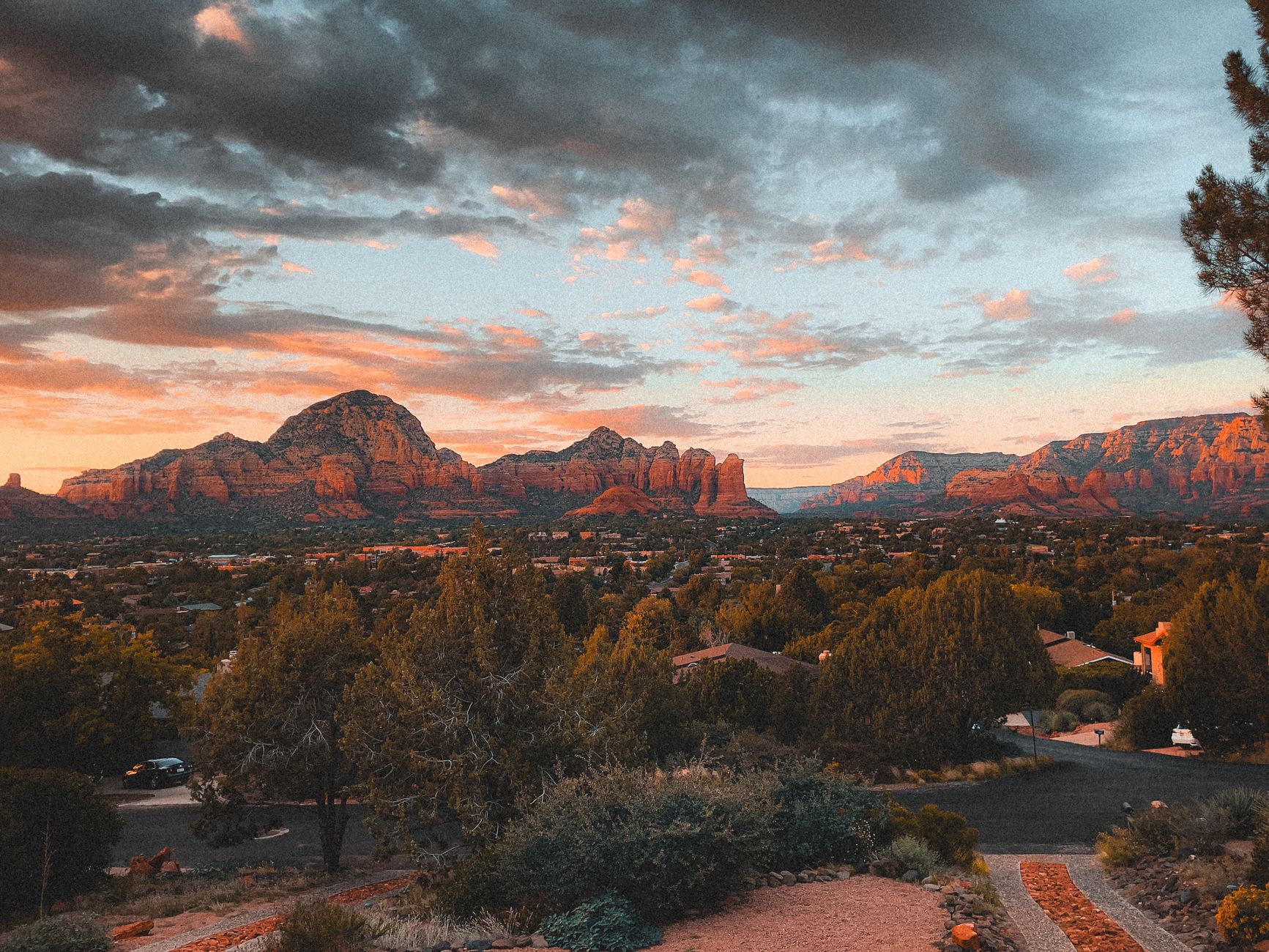
People fall for Sedona on a long weekend and start doing the math on the drive home. It is a beautiful daydream, and for a lot of retirees it turns into a very good decision. But retiring somewhere is different from vacationing there, and after years of helping people make this move, I would rather you know the honest version now than find out in year two. Here is what retiring in Sedona is actually like, the good and the parts nobody puts on a postcard.
The Climate Is the Whole Point (and It Is Not Phoenix)
Sedona sits around 4,350 feet, high enough that it never becomes the Valley of the Sun. You get more than 300 days of sunshine and four real but mild seasons: warm summers that cool off at night, a short winter with the occasional dusting of snow on the red rocks, and spring and fall that are close to perfect. Summers here run noticeably cooler than Phoenix or Scottsdale, which is exactly why so many Arizonans keep a place up here. A handful of afternoon monsoon storms roll through in late summer, just enough to cool things off and green up the desert, and then they pass.
Healthcare: Good for Most, Plan for Complex
This is the question every smart retiree asks, and the honest answer is that Sedona is well covered for routine and moderate needs. Verde Valley Medical Center in Cottonwood, about 20 minutes away, is the nearest full hospital, with an emergency room, general surgery, and cardiac care. Flagstaff adds more specialists within an hour. For truly complex or specialized care, plan on the roughly two-hour drive to Phoenix, where you have some of the best hospitals in the Southwest. If you have a condition that means frequent specialist visits, factor that drive into your decision honestly. For most active retirees, the local coverage is more than enough.
Taxes and Cost: A Split Picture
Arizona is genuinely friendly to retirees on taxes. The state does not tax Social Security benefits, other retirement income like pensions and 401k withdrawals is taxed at a flat 2.5 percent (one of the lowest rates in the country), and property taxes in Yavapai County run well below the national average. That is the good news, and it is real.
The other side is cost of living. Sedona is a resort town with limited land and limited housing, and prices reflect that. It is one of the pricier markets in Arizona, so if budget is a factor, the smart move is to look just down the hill. The Verde Valley towns give you far more home for the money while keeping the red rocks in your rearview mirror. For a straight answer on what your dollars actually buy right now in each area, that is a quick conversation, and current numbers matter more than anything I could print here.
Where Retirees Actually Land
Village of Oak Creek. The most popular landing spot for a reason. It sits a little lower and sunnier, has more single-level homes and manageable lots, and opens right onto the flat Bell Rock Pathway network for easy daily walks. Great relative value for greater Sedona, too.
West Sedona. Where the town actually lives. You are close to the grocery stores, the medical offices, the library, and most of the practical daily errands, with trailheads out the back. If you want full-time-resident convenience, this is it.
The Verde Valley. Cottonwood, Clarkdale, and Cornville offer flatter terrain, walkable Old Town Cottonwood with its tasting rooms and restaurants, and the most home for your money. Plenty of retirees choose the Verde Valley and simply drive up to Sedona whenever they want the show. For the full breakdown, see our Sedona neighborhoods guide.
The Lifestyle You Are Actually Buying
This is where Sedona earns its reputation. You have more than 100 hiking trails, many of them gentle enough for a daily loop no matter your fitness (start with our easy hikes guide). There are 80-plus art galleries, a real theater and film scene, sound healing and wellness on every corner if that is your thing, and wine country 20 minutes away in Page Springs. It is an active, outdoorsy, creative retirement, not a rocking-chair one. People who thrive here are the ones who came to keep moving.
The Honest Cons
It is not cheap. Covered above, but worth repeating. Budget realistically.
Tourist season is real. Spring and fall bring traffic and crowds. Locals learn the back routes and shop early.
Big-city amenities require a drive. Major shopping, a big airport, and pro sports mean Flagstaff or Phoenix. Sedona is small on purpose.
Frequently Asked Questions
Is Sedona a good place to retire?
For active, outdoorsy retirees who value scenery, mild weather, and an arts community over big-city convenience, it is one of the best in the Southwest. The main trade-offs are cost and distance from major medical and shopping.
Does Arizona tax retirement income?
Arizona does not tax Social Security benefits. Other retirement income is taxed at a flat 2.5 percent, and property taxes are low. Confirm your specific situation with a tax professional.
What is the nearest hospital to Sedona?
Verde Valley Medical Center in Cottonwood, about 20 minutes away, with Flagstaff and Phoenix for more specialized care.
Is it cheaper to retire in the Verde Valley than in Sedona?
Generally yes. Cottonwood, Clarkdale, and Cornville offer more home for the money while keeping you minutes from Sedona’s red rocks.
Thinking seriously about making Sedona home for this chapter? The best first step is an honest conversation about how you want to live, what your budget really buys, and which neighborhoods fit. No pressure, just a straight answer from someone who lives it.
Book a Free Consult or call or text (928) 599-4456.
