
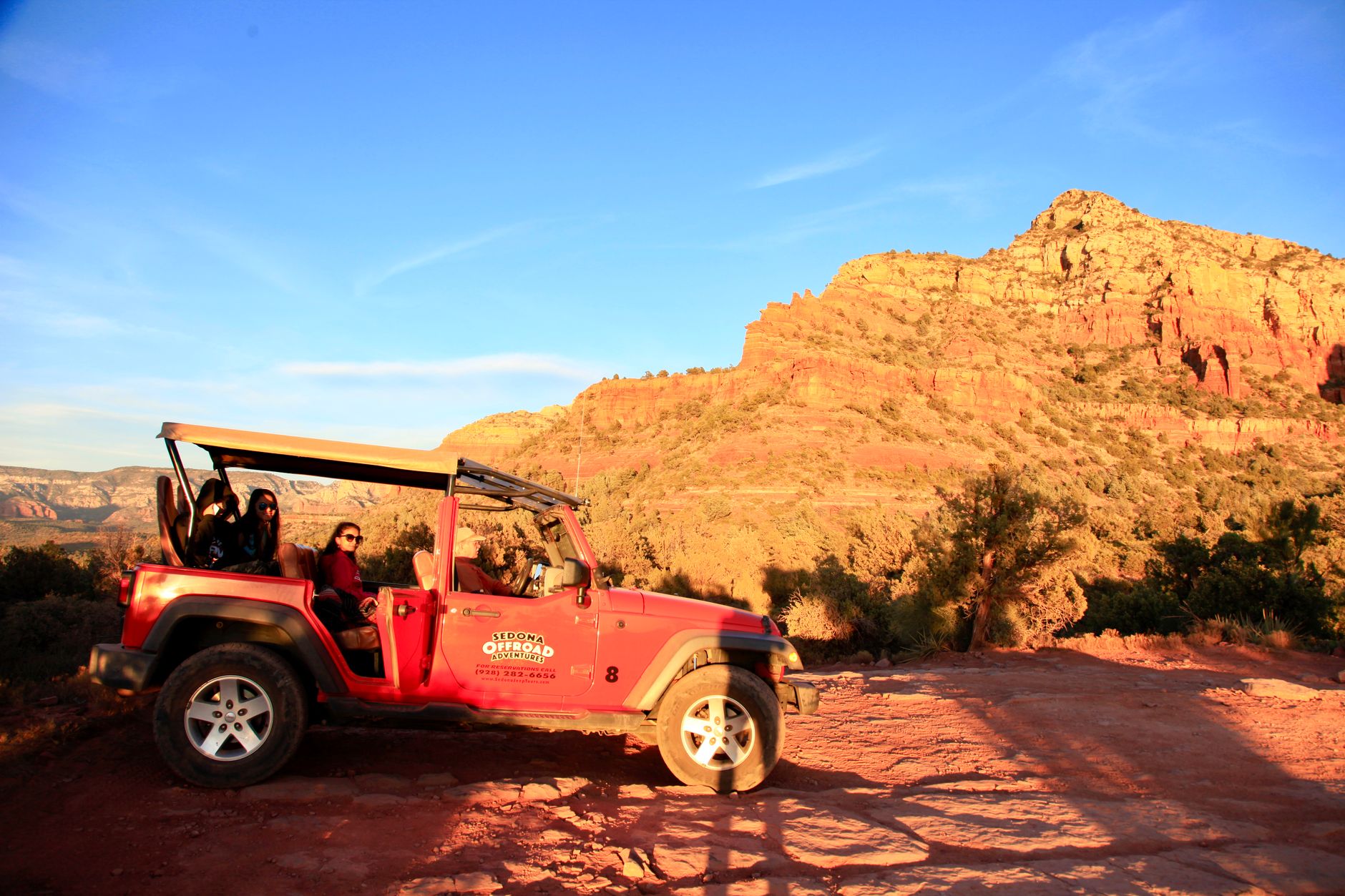
Some of the best red rock views in Sedona are a few miles down a rough dirt road, where pavement ends and the slickrock starts. That’s why Sedona jeep tours have been a local favorite for generations. A good off-road trip puts you in the middle of the scenery instead of looking at it through a windshield on State Route 89A. Whether you’re visiting for a long weekend or you’ve lived in West Sedona for years and still haven’t driven Broken Arrow, here’s what you need to know about the tours, the trails, and how to plan a day off the pavement.
Why Sedona Jeep Tours Are Worth It
Sedona sits at about 4,350 feet in Arizona’s Verde Valley, surrounded by national forest land and a web of old ranch roads, forest roads, and rugged backcountry routes. A lot of the most dramatic country is out of reach for a standard rental car, and some of it is out of reach for a stock SUV. An open-air jeep with a guide who knows the routes covers ground you couldn’t on your own.
A guided tour also gets you a story to go with the scenery. Local guides usually talk about the area’s geology, the layered sandstone that gives the rocks their color, the plants and wildlife of the high desert, and the ranching and settlement history behind names like Schnebly Hill. You leave knowing why the place looks the way it does.
It’s also one of the easiest ways to see a lot of Sedona when hiking isn’t an option. If you’re traveling with kids, older parents, or anyone who doesn’t want to scramble up a trail in the heat, a jeep tour still gets everyone out into the red rocks.
The Best-Known Off-Road Trails in Sedona
Sedona’s off-road routes run from bumpy but easy dirt roads to some of the most technical slickrock driving in Arizona. These are the names you’ll hear most.
Broken Arrow Trail
Broken Arrow is Sedona’s signature technical route, east of State Route 179 near the south end of town. It crosses open slickrock, climbs steep ledges, and passes landmarks like Submarine Rock and Chicken Point, with big views toward the formations around Cathedral Rock and the Little Horse area. This is the trail that made Sedona jeep tours famous. The descents look close to vertical from the passenger seat. Most visitors ride it with an experienced tour operator, and the route is heavily shared with mountain bikers and hikers. Unless you’re a seasoned off-road driver in a properly built vehicle, take the guided ride.
Schnebly Hill Road
Schnebly Hill Road starts near Uptown on the east side of Oak Creek and turns from pavement to a rough, rocky dirt road as it climbs toward the Mogollon Rim. It’s one of the most scenic drives in the area. The higher you climb, the wider the views over Sedona’s red rock amphitheater. The road is slow going, with ruts, rocks, and washboard sections, and it changes with weather and maintenance. Wet conditions and winter weather can make the upper stretches impassable, and parts may close seasonally, so check current conditions before heading up.
Soldier Pass
The Soldier Pass area in West Sedona is known for the Devil’s Kitchen sinkhole and the Seven Sacred Pools, a series of natural basins in the sandstone. Vehicle access through this area is restricted and largely limited to permitted tour operators, partly because it runs close to residential neighborhoods. The easiest way to see it from a vehicle is to book a tour that includes it.
Dry Creek and Vultee Arch Roads
North of West Sedona, the forest roads off Dry Creek Road lead toward some of the area’s best-known trailheads, including the access road to Devil’s Bridge. These roads are rough, rutted, and best handled with high clearance. Many people drive part of the way and hike the rest. They’re a good introduction to off-road driving if you’ve rented a capable vehicle and want something less technical than Broken Arrow.
Backcountry Routes Beyond Town
Past the main corridors there are longer forest roads heading west toward the Boynton Canyon and Secret Mountain areas, and back toward the rim. Some tour companies run extended trips into this quieter country, often with stops at historic sites, cliff dwelling viewpoints, or overlooks that see far fewer visitors than the spots in town.
Guided Tour or Self-Drive Jeep Rental?
This is the biggest planning decision, and the right answer depends on your experience and what you want out of the day.
When a Guided Tour Makes Sense
- You want the technical trails. Routes like Broken Arrow take real skill, and a mistake on slickrock can damage a vehicle or worse.
- You want to look around, not drive. When someone else is driving, everyone in the group gets to enjoy the views.
- You want the local knowledge. Guides know the history, the geology, and the best stops for photos.
- You want access to restricted areas. Some routes are open only to permitted commercial operators.
When a Rental Makes Sense
- You have real off-road experience and you’re comfortable reading terrain, picking lines, and turning around when you should.
- You want flexibility to stop at trailheads, hike, and set your own pace.
- You’re sticking to moderate roads like Schnebly Hill Road or the forest roads off Dry Creek Road.
Several local companies rent jeeps and other off-road vehicles in Sedona. Read the rental agreement closely. Many rental companies restrict which trails you can take their vehicles on, and the most technical routes are often off-limits.
Types of Sedona Jeep Tours to Choose From
Tour operators in Sedona usually build their trips around a theme or difficulty level. Common options include:
- Technical slickrock tours that focus on the thrill of routes like Broken Arrow.
- Scenic tours that stick to smoother roads and focus on viewpoints and photography.
- Sunset tours timed for the golden hour, when the red rocks glow orange and deep crimson.
- Vortex tours that visit or discuss Sedona’s four best-known energy vortex sites: Airport Mesa, Cathedral Rock, Bell Rock, and Boynton Canyon.
- History and archaeology tours that cover ranching history and the ancient cultures that lived in the area.
- Stargazing tours that take advantage of Sedona’s dark skies after sundown.
Tour length, group size, and vehicle style vary a lot between companies. Some use open-air jeeps, others use enclosed vehicles that are more comfortable in summer heat or on chilly winter mornings. Ask what you’ll be riding in before you book.
When to Go Off-Roading in Sedona
Sedona has four mild seasons, and the trails are open most of the year, but each season feels different.
- Spring is one of the most popular times, with comfortable temperatures and wildflowers in the high desert. Expect busy weekends and book ahead.
- Summer gets warm, especially midday. Morning and sunset tours are the most comfortable. The July-August monsoon brings dramatic afternoon storms that can flood washes and make roads slick, so tours may reroute or reschedule.
- Fall is a local favorite. The weather is mild, the light is soft, and fall color shows up in Oak Creek Canyon and the higher country.
- Winter is quieter. Days are often crisp and clear, and the occasional light snow on red rock is one of the prettiest sights in Arizona. Higher routes can be muddy or closed after storms.
Tips for a Great Day on the Trails
- Book early in peak seasons. Spring, fall, and holiday weekends fill up fast, especially sunset tours.
- Dress in layers. Open-air jeeps get breezy and temperatures swing between morning and afternoon.
- Bring water and sun protection. Sedona’s elevation and dry air dehydrate you faster than you’d expect. Sunglasses, a hat that won’t blow off, and sunscreen are must-haves.
- Secure your gear. Phones and cameras get bounced around on rough roads. Use a strap or a zippered pocket.
- Mention health concerns up front. Technical routes are bumpy and jarring. If you have back, neck, or pregnancy concerns, ask the tour company which routes are gentler.
- Know the parking rules. If you’re driving yourself to trailheads, many national forest sites around Sedona require a Red Rock Pass or another valid recreation pass for parking. Check current requirements before you go.
- Respect the land and the neighbors. Stay on designated roads, pack out what you bring in, and keep noise down near residential areas. Off-road traffic is a real issue for many Sedona residents, and responsible driving keeps these routes open.
Pairing a Jeep Tour with the Rest of Your Sedona Day
A morning or afternoon jeep tour fits easily into a full Sedona day. Many tours leave from Uptown, so you can browse the galleries there or walk over to Tlaquepaque Arts and Shopping Village afterward for lunch and shopping. If your tour runs near the south end of town, the Chapel of the Holy Cross is close to the Broken Arrow area and worth the stop.
For a slower afternoon, head about 20 minutes southwest to Cottonwood’s Old Town for wine tasting, or follow the Verde Valley Wine Trail out to Page Springs and Cornville. If you still have energy, drive up to Jerome, the historic mining town perched on Mingus Mountain, for sweeping views back across the valley toward the red rocks you just explored.
Sedona is about two hours north of Phoenix and roughly 45 minutes south of Flagstaff, so a jeep tour also works as the centerpiece of a day trip. If you have the time, though, stay a night or two. The trails, viewpoints, and small towns of the Verde Valley are worth more than an afternoon.
Making the Most of Sedona Jeep Tours
The best off-road day in Sedona comes from matching the route to your group. Thrill-seekers should book a technical slickrock ride on Broken Arrow. Photographers and first-timers usually do better on a scenic or sunset tour. Experienced drivers who want their own pace can rent a capable vehicle and explore the forest roads off Dry Creek Road or the climb up Schnebly Hill. Whatever you pick, Sedona jeep tours are one of the best ways to understand how big and wild the red rock country around this town really is.
Frequently Asked Questions
How long do Sedona jeep tours last?
Most Sedona jeep tours run between about one and a half and three hours, depending on the route and the company. Shorter scenic tours stay close to town, while longer backcountry and technical tours cover more ground. Check the tour description for exact timing before booking.
What is the most famous jeep trail in Sedona?
Broken Arrow Trail is Sedona’s best-known jeep route. It crosses open slickrock with steep climbs and descents and passes landmarks like Submarine Rock and Chicken Point. Most visitors ride it with an experienced tour guide because of how technical it is.
Can I drive the Sedona off-road trails myself?
Yes, many forest roads around Sedona, like Schnebly Hill Road and the roads off Dry Creek Road, are open to private high-clearance vehicles. Some routes are restricted to permitted tour operators, and many rental companies limit which trails you can drive. Technical trails like Broken Arrow should only be attempted by experienced off-road drivers.
What is the best time of year for a jeep tour in Sedona?
Spring and fall offer the most comfortable temperatures and are the most popular seasons. Summer tours are best in the morning or at sunset to avoid midday heat, and July-August monsoon storms can affect routes. Winter is quieter and often clear, though some higher roads may be muddy or closed after storms.
Get the Local’s Guide to Sedona
Every week we send the best of Sedona and the Verde Valley: the trails worth the drive, where the locals eat, and what is happening around town. Join free.
