
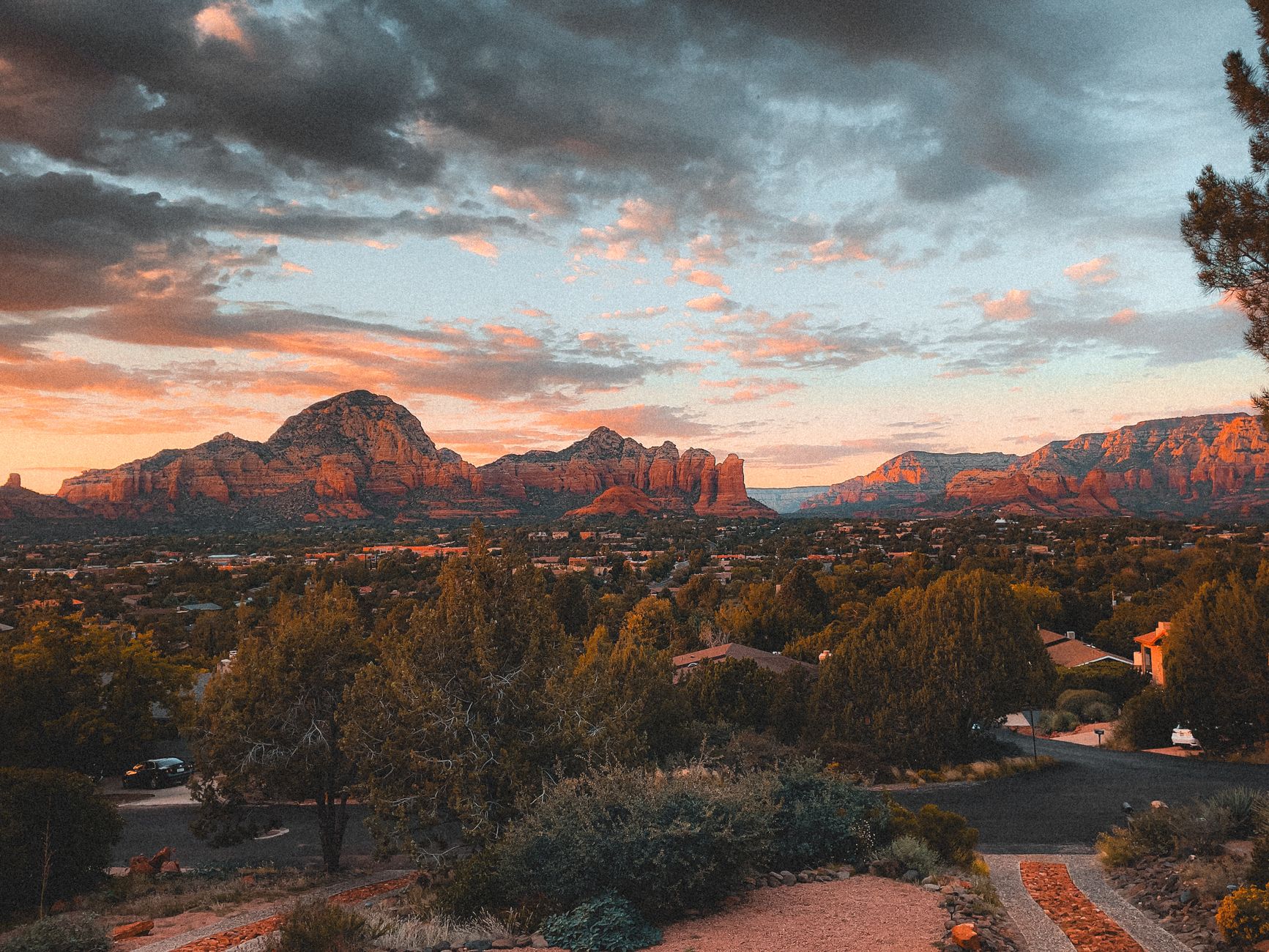
You found Sedona on vacation, fell for the red rocks, and now you are seriously asking yourself what it takes to buy here when you live somewhere else entirely. Buying a home in Sedona from out of state is one of the most common ways people end up in this town. Few buyers here grew up locally. Most arrived the same way you might: a trip to Cathedral Rock or a sunset on Airport Mesa that would not let go. The good news is the process is manageable once you understand how it is different from a local, in person purchase, and what to think through before you commit.
Why So Many Sedona Buyers Come From Somewhere Else
Sedona sits at about 4,350 feet in Arizona’s Verde Valley, roughly two hours north of Phoenix and about 45 minutes south of Flagstaff. That elevation gives it four real but mild seasons, warm summers, a July and August monsoon that cools things down with dramatic afternoon storms, and just enough winter to see occasional light snow dust the red rocks without the hassle of a true mountain winter. It is a small, specific market, and a large share of buyers are relocating from out of state for retirement, a second home, remote work flexibility, or an investment property. If that is you, you are not an outlier. You are the norm.
Buying a Home in Sedona From Out of State: What’s Actually Different
The mechanics of a purchase do not change based on your zip code. You can write an offer, negotiate, and close on a Sedona property without ever setting foot here, using video walkthroughs, electronic signatures, and a local agent as your eyes and ears. What changes is how much you lean on someone who knows the terrain, literally and figuratively. Sedona’s lots are rarely flat and uniform. Red rock, washes, septic systems instead of city sewer in many areas, and well water in some pockets of the Verde Valley all affect how a property functions day to day. An agent who works this market regularly will flag those details before they become a surprise at closing.
What to Line Up Before You Start Looking
- A local agent who can preview properties on your behalf and give you honest video walkthroughs, not just polished listing photos
- A lender familiar with Arizona and, ideally, with second home or investment property underwriting if that applies to you
- A plan for at least one in person visit before closing, even if everything else happens remotely
- A home inspector who knows what to look for in this terrain specifically, septic, well, roof condition after monsoon season, and foundation behavior on sloped or rocky lots
Picking the Right Part of Town
Sedona is not one neighborhood, and where you land changes your daily life more than people expect.
West Sedona
This is the practical, lived in side of town. Grocery stores, local restaurants, medical offices, and most of the everyday errands happen here. If you want to feel like a resident rather than a visitor, West Sedona is usually the answer.
Uptown
Uptown is the postcard version of Sedona, galleries, shops, and restaurants, with most of the tourist foot traffic. A home here puts you close to the energy of town, but also closer to seasonal crowds.
Village of Oak Creek (VOC)
South of the main town, the Village of Oak Creek tends to be quieter and often more attainable, with golf courses and a bit more breathing room. Many out of state buyers who want Sedona’s setting without Uptown’s bustle end up here.
The Wider Verde Valley
If you widen your search even slightly, Cottonwood is about 20 minutes away, growing, with a walkable Old Town and wine tasting rooms. Clarkdale and Camp Verde offer their own flavor, Jerome sits dramatically on Mingus Mountain as a historic mining town turned arts community, and Cornville and Page Springs anchor the wine country feel along the Verde Valley Wine Trail. None of these are Sedona proper, but all of them put you within easy striking distance of it.
What It’s Actually Like to Live Here
Buying a home in Sedona from out of state usually starts with the scenery, but it is worth thinking past the view. Life here revolves around the outdoors in a way that is hard to replicate elsewhere. Hiking Bell Rock or Cathedral Rock, mountain biking the extensive trail network, or finding a quiet corner of Oak Creek Canyon on a hot afternoon is simply part of the rhythm. Slide Rock State Park draws crowds in summer, while Devil’s Bridge and Airport Mesa are year round draws for sunrise and sunset. Spiritually minded residents and visitors alike are drawn to the four well known vortex sites, Airport Mesa, Cathedral Rock, Bell Rock, and Boynton Canyon, which shape a meaningful part of Sedona’s identity and local economy.
Tourism also means traffic patterns and parking considerations near the main trailheads and Uptown, especially during peak season. If you are coming from a quiet rural area, that may take adjustment. If you are coming from a dense city, Sedona will likely feel wide open by comparison.
Questions to Ask Yourself Before You Buy
- Will this be a full time residence, a seasonal second home, or an investment property, and does the neighborhood you are considering fit that use
- How important is walkability to shops and restaurants versus privacy and space
- Are you comfortable with well water or septic if the property you love has either
- Do you want to be in the heart of Sedona, or are you open to nearby Verde Valley towns like Cottonwood or Clarkdale for more room to work with
- Have you planned at least one visit in person to walk the property and the surrounding area before you commit
Making the Remote Purchase Process Work
Out of state buyers who have the smoothest experience tend to do a few things consistently. They lean on a local agent for honest, unfiltered feedback rather than just listing details. They ask for video walkthroughs that include the surrounding lot and neighbors, not just the interior. They line up financing early so they can move quickly when the right property appears, since desirable homes in a small market do not sit long. And they treat the in person visit, even a short one, as non negotiable, because photos and video cannot fully convey elevation changes, lot slope, or how the red rock light hits a property at different times of day.
Buying a home in Sedona from out of state takes a bit more coordination than a local purchase, but it is a well worn path. Plenty of the people hiking Bell Rock or sipping wine along the Verde Valley Wine Trail today started exactly where you are now, searching listings from somewhere else and wondering if this red rock country could actually become home.
Frequently Asked Questions
Can I buy a home in Sedona without visiting in person first?
You can legally complete a purchase remotely using video walkthroughs, electronic signatures, and a trusted local agent. Most experienced buyers still recommend at least one in person visit before closing to assess the lot, light, and surroundings firsthand.
What areas of Sedona are best for out of state buyers?
It depends on lifestyle goals. West Sedona suits buyers who want everyday convenience, Uptown suits those who want to be near galleries and restaurants, and the Village of Oak Creek offers a quieter, more attainable setting with golf access.
Do Sedona homes use city water and sewer?
Not universally. Many properties in and around Sedona and the broader Verde Valley rely on well water or septic systems rather than municipal service, so it is worth confirming utility setup for any specific property.
Is Sedona a good fit for a second home or just full time living?
Sedona works for both. Its mix of outdoor recreation, arts and dining, and proximity to Flagstaff and Phoenix makes it popular as a full time residence, a seasonal second home, and an investment property, depending on the buyer’s goals.
Thinking About More Than a Visit?
Sedona has a way of making people wonder what it would be like to stay. If owning a home here has crossed your mind, whether that is a full-time move, a second home, or a place to retire, a home consult is where you get real answers about neighborhoods, what things cost, and what actually fits.
