
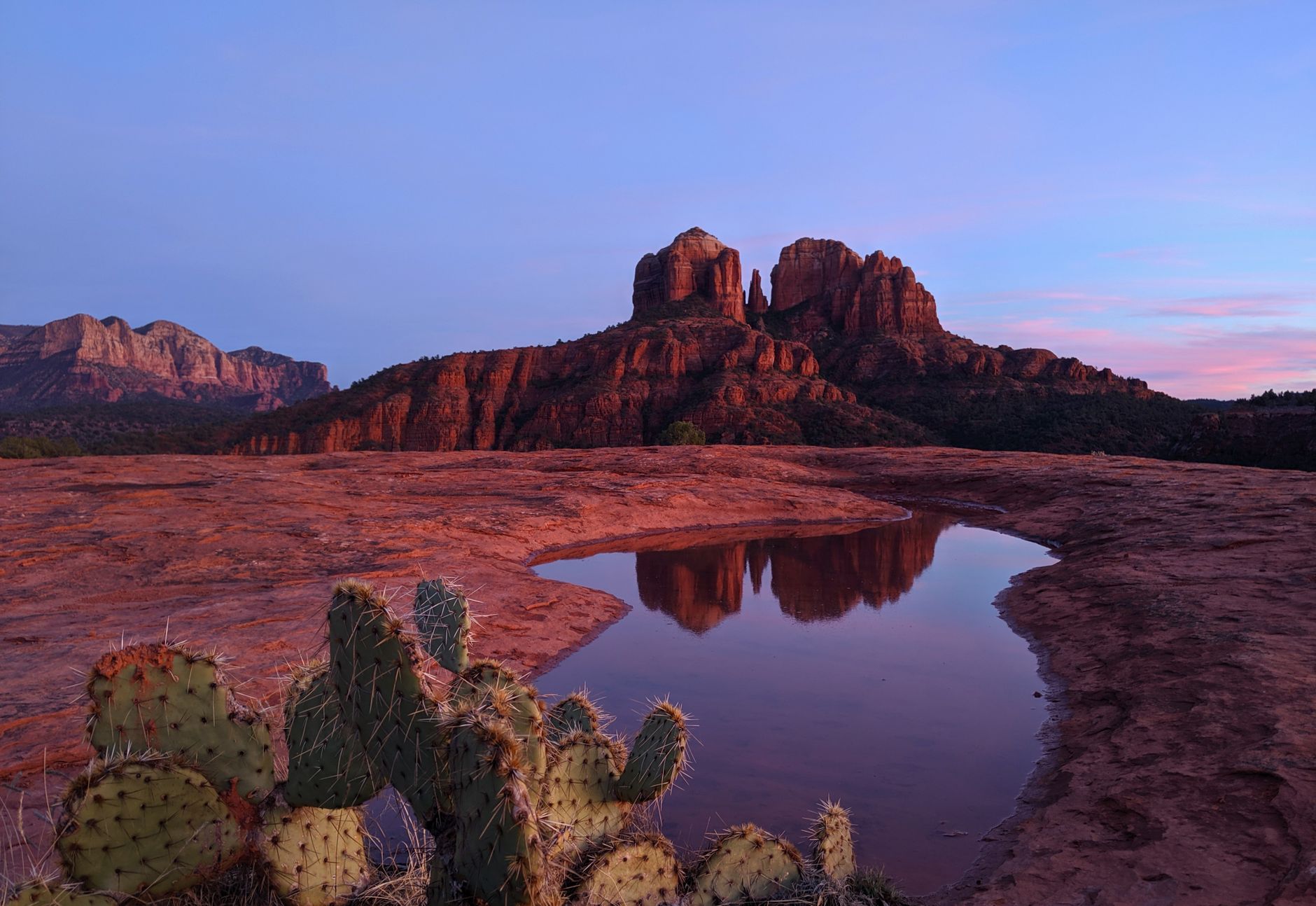
Ask ten locals when the best time to visit Sedona is and you will get ten different answers, mostly because Sedona does not really have a bad season. Sitting at about 4,350 feet in Arizona’s Verde Valley, the town gets four real seasons, but none of them are extreme. That is part of the magic here. The red rocks look different depending on the light, the crowds shift month to month, and what you should pack changes more than you would expect for a place that is famous for sunshine. If you are trying to time a trip, here is what each season actually feels like on the ground.
What Is the Best Time to Visit Sedona?
For most people, the best time to visit Sedona is spring, from March through May, or fall, from late September through November. Daytime temperatures sit comfortably in the 60s and 70s, the light on Cathedral Rock and Bell Rock is sharp and clear, and trails like Devil’s Bridge are hikeable without the summer heat. These shoulder seasons also tend to be Sedona’s busiest, especially around spring break and October weekends, so if crowds bother you more than heat does, that is worth weighing.
Spring in Sedona (March to May)
Spring is when Sedona wakes up. Wildflowers show up along lower-elevation trails, Oak Creek starts running strong with snowmelt from the Mogollon Rim, and Uptown gets busy with visitors heading out early to beat the midday sun. Mornings can still be cool, so layers matter, but by April you are looking at classic hiking weather. This is a popular window for weddings and vortex tours at spots like Airport Mesa and Boynton Canyon, since the light and temperatures cooperate.
Summer in Sedona (June to August)
Summer runs hot in the afternoons, often into the 90s and occasionally higher, but it is a dry heat until the monsoon arrives in July and August. Monsoon season brings dramatic afternoon storms, cooler evenings, and some of the best cloud photography of the year over the red rocks. Locals plan around it: hike early, usually by 7 or 8 a.m., then spend afternoons in Oak Creek Canyon or at Slide Rock State Park, where the creek stays cold no matter how hot it gets in town. Flash flooding is real during monsoon storms, so trail and canyon conditions are worth checking before you head out.
Fall in Sedona (September to November)
Fall might be the most underrated season here. The monsoon tapers off by late September, temperatures ease back into the 70s, and Oak Creek Canyon puts on a real color show as the cottonwoods and maples turn, usually peaking in late October to early November. It is a favorite time for scenic drives up Highway 89A toward Flagstaff, about 45 minutes north, and for wine tasting along the Verde Valley Wine Trail through Page Springs, Cornville, and Cottonwood’s Old Town.
Winter in Sedona (December to February)
Winter is Sedona’s quiet season, and that is exactly its appeal for a lot of visitors. Daytime temperatures often reach the 50s and 60s, red rocks occasionally get a dusting of snow that melts within a day or two, and trails are far less crowded. Chapel of the Holy Cross and Tlaquepaque Arts and Shopping Village are especially pleasant without the summer foot traffic. It is also the best time to find more available lodging and a slower pace around town.
Best Time to Visit Sedona for Hiking
If hiking is the main goal, spring and fall are hard to beat, but plenty of serious hikers prefer winter for the solitude. Trails like Cathedral Rock and Devil’s Bridge can get genuinely crowded on spring and fall weekends, with parking lots filling before 8 a.m. Winter mornings, once any snow has cleared, offer some of the clearest, quietest hiking conditions of the year. Summer hiking is still doable, it just needs to happen early, with plenty of water and an eye on the sky once monsoon season sets in.
Best Time to Visit Sedona to Avoid Crowds
Late January through early March and again in late November through early December tend to be the calmest stretches. Summer weekdays, outside of the busiest holiday weeks, can also be surprisingly manageable if you are willing to deal with the afternoon heat. If you want the red rocks mostly to yourself, weekday mornings almost any time of year beat weekend mornings in any season.
Exploring Beyond Sedona
Whenever you decide to visit, it is worth building time into the trip for the greater Verde Valley. Cottonwood, about 20 minutes from Sedona, has a walkable Old Town with wine tasting rooms and a slower, small-town feel. Jerome, a historic mining town perched on Mingus Mountain, makes for a scenic afternoon with sweeping views back down into the valley. Camp Verde and Clarkdale round out the area for anyone interested in history or wine country without the density of Uptown Sedona.
Where to Stay Depending on the Season
- Uptown Sedona puts you closest to galleries, restaurants, and the busiest trailheads, which matters more in spring and fall when parking fills up fast.
- West Sedona is more residential and local, with easier everyday access to grocery stores and casual restaurants, a good base year-round.
- Village of Oak Creek, just south of town, tends to be quieter and often more attainable, with golf and easy access to Bell Rock and the Courthouse Butte loop.
Final Thoughts on Timing Your Trip
There is no single wrong time to visit Sedona. Spring and fall give you the most comfortable weather and the best light on the rocks, summer trades heat for dramatic monsoon skies and creek days, and winter rewards anyone who wants the red rocks without the lines. The best time to visit Sedona really comes down to what you want out of the trip, whether that is a packed hiking itinerary, a quiet wine country weekend, or a slower winter escape with fewer crowds.
Frequently Asked Questions
What is the best month to visit Sedona?
October is often considered the best single month, with cooling temperatures, fall color in Oak Creek Canyon, and the monsoon season behind you. March and April are close runners up for spring wildflowers and mild hiking weather.
What month is Sedona least crowded?
January and February tend to be the quietest months, followed by early December before the holidays pick up. Weekday mornings in these months offer the most solitude on popular trails.
Is it better to visit Sedona in summer or winter?
It depends on your priorities. Summer offers long days and dramatic monsoon storms but requires early hikes to avoid the heat, while winter brings mild days, occasional light snow on the rocks, and far fewer crowds.
Does it snow in Sedona?
Sedona occasionally gets light snow in winter, usually melting within a day or two due to its 4,350 foot elevation. It is not a snow destination, but a dusting on the red rocks is a memorable sight for visitors who catch it.
Get the Local’s Guide to Sedona
Every week we send the best of Sedona and the Verde Valley: the trails worth the drive, where the locals eat, and what is happening around town. Join free.
